St. Gerlach
The St. Gerlach collection contains 40 medieval charters of the Norbertinessen monastery in Houthem, founded in 1202 over the grave of the pilgrim saint and hermit St. Gerlach.

Stories
The stories of
St. Gerlach

Het leven van Gerlach van Houthem
The Norbertine monastery (convent) of St. Gerlach was founded in 1202 over the grave of the pilgrim and hermit Gerlach of Houthem. This Gerlach lived between 1120 and 1165.

Gerlach en de heren van Valkenburg
The monastery in Heinsberg to which the shrine of St. Gerlach was donated in 1165 was the house monastery of the lords of Valkenburg-Heinsberg.

Gerlach and Meerssen
Gerlach at some point came into conflict with the monks of Meerssen.

The Norbertines Foundation
The land on which the hermitage of St. Gerlach stood was donated to the Mariastift of Heinsberg by Count Gozewijn IV of Valkenburg-Heinsberg in the year of his death (1165).

Religious life in and around the monastery
The St. Gerlach Monastery originated at the tomb of St. Gerlach, making it a shrine of St. Gerlach from the beginning.

Life in the convent: the religious community
The convent of St. Gerlach in the 17th century had about 37 noble religious or canonesses according to the monastic or rule of life of St. Norbert ("virgines primae").

Life in the monastery: provost and prioress
At the head of the monastic community of St. Gerlach were a prioress and a provost.
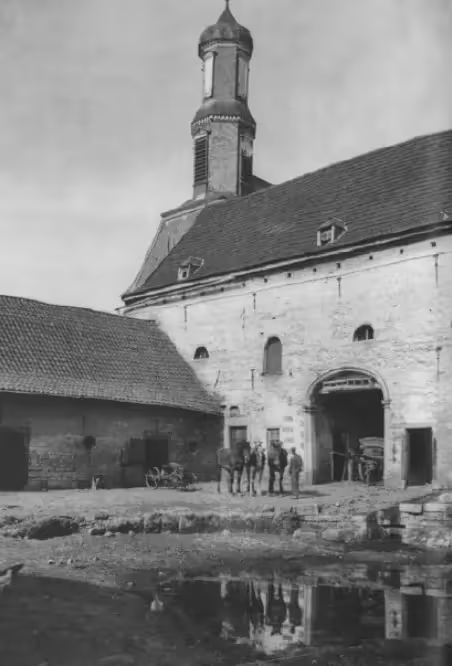
The household of the monastery
The provost was in charge of the monastery's income. In this, the tenant farms played an important role, including the tenant farm built in 1759 to a design by the Aachen architect Couven.

St. Gerlach as a Catholic enclave in the 17th and 18th centuries
In the 17th century the population and nobility of three Landen van Overmaze wanted to remain Catholic under Spanish rule.

St. Gerlach as a centre of popular devotion
In 1599 and in 1606 Henricus Costerius, deacon of Bergen op Zoom, donated relics to the monastery. In the year 1599 the Gerlach well was recovered by the steward of the monastery.
partners



donors














Beijer family