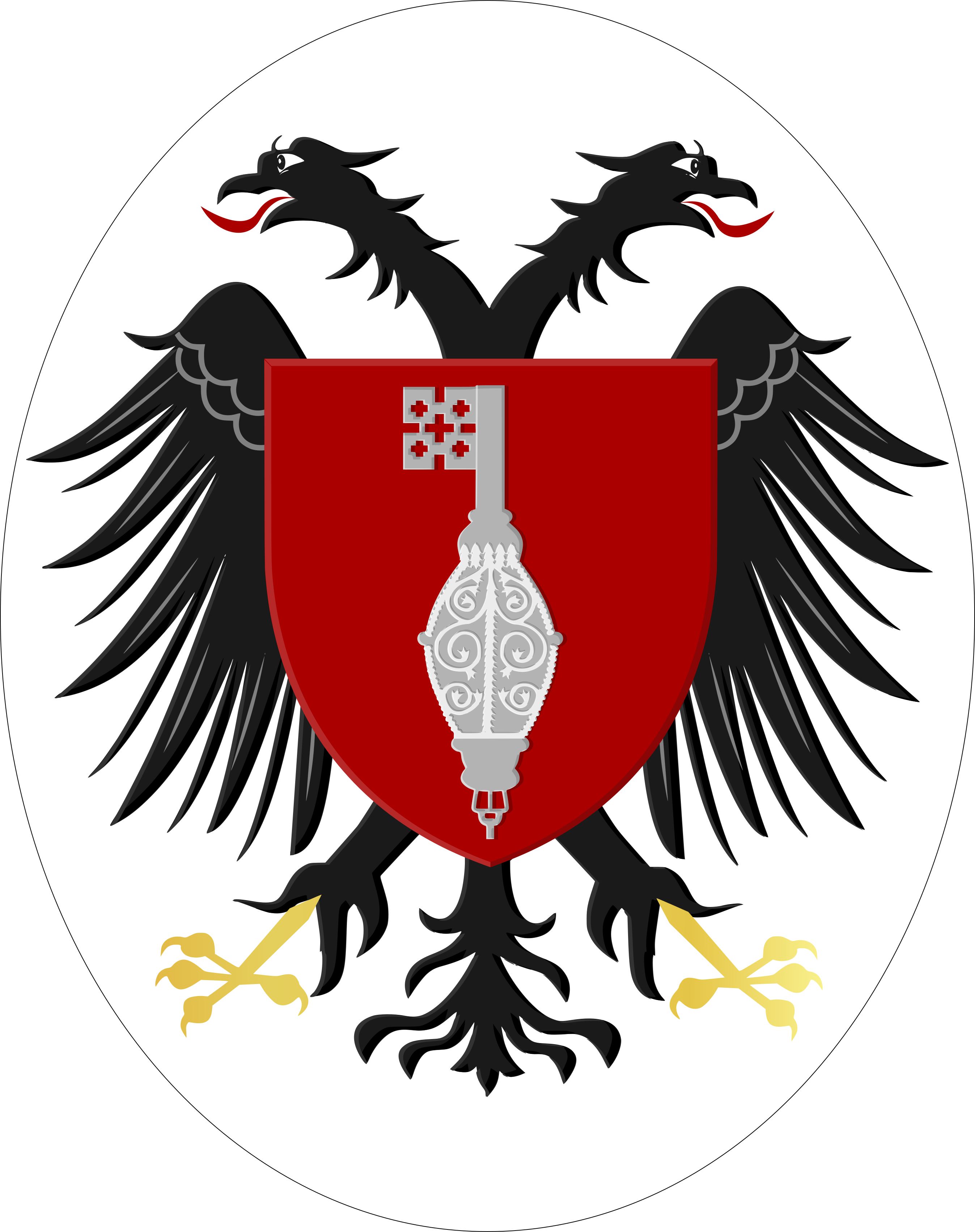
Context of monastic foundations in the German Empire
Charlemagne and his successors governed their empire with the help of feudal lords. In the course of the 11th century they realised that the large-scale fiefdom - feudalisation - leads to the erosion of their power. As a result, they lost direct control over their territories in favour of feudal lords.
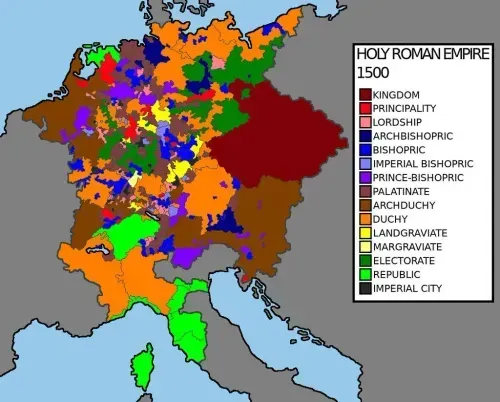
"This endeavour led, among other things, to the creation of landlord territories"
Whereas fiefdoms initially reverted to the emperor as feudal lord upon the death of the feudal officer, the desire of feudal officers to make fiefdoms hereditary within their families eroded imperial power. This striving led, among other things, to the creation of lordly territories, such as the manor of Valkenburg, where the emperor had less and less say. This is where the lordships of the later Middle Ages originated, such as the duchies of Brabant, Gelre, Gulik and Limburg.
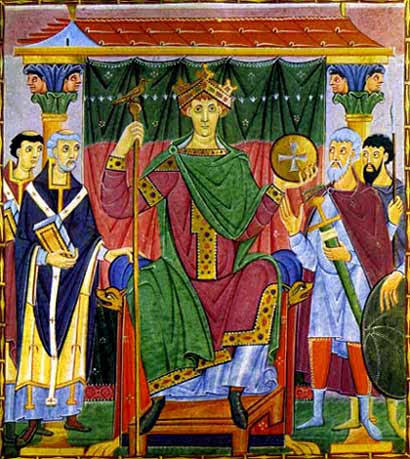
The German emperor Otto III (983-1002) thought he had found a solution to this problem by vesting bishops and abbots with secular power, since celibacy due to the absence of offspring seemed to prevent the establishment of dynasties.
Since then, however, he and his successors paid more attention to the administrative abilities than to the spiritual leadership of bishops and abbots. This imperial appointment policy led to the so-called Investiture War, a conflict with Pope Gregory VII (1073-1085) over the appointment rights of senior clergy, who exercised secular power in addition to ecclesiastical power, which continued until the Treaty of Worms (1122).
In 985 Emperor Otto III was the first to appoint the Liege bishop Notgerus (972-1008) to the position of imperial lord. He thus laid the foundations of the principality of Liege. For the clergy in the area between the Meuse and Rhine rivers imperial patronage meant that in the Investiture Conflict they were more likely to be on the side of the emperor than on that of the pope.
This construction was later imitated by feudal lords of the emperor, who also wanted to secure parts of their territorial power by granting seigniorial rights to abbots and monasteries, such as the lords of Heinsberg and Valkenburg, who proceeded to found the monastery of Houthem-St. Gerlach (1201). By founding such monasteries, local nobles expressed their awareness that they were able to exercise power autonomously. Thus, the monasteries and chapters they founded in the first decades of the 12th century helped to define and perpetuate their territorial power.
By founding such monasteries, the regional rulers tried to serve a double purpose. On the one hand, they wanted to secure a part of their worldly power, and on the other hand they tried to secure their place in the hereafter by making the reading of masses and the like for their salvation a condition of their donation. They themselves operated as advocatus - protector - of the convent. They also supervised the daily running of the monastery by appointing a provost, who saw to it that the worldly rights, with which the founders had endowed the monastery, were respected. They left the spiritual leadership to the prior or abbot.
In the course of time monasteries, such as the Norbertinesstift Houthem-St.-Gerlach, acquired all kinds of additional rights, usually in the form of donations of money and goods, by which the donors tried to secure their salvation. These were recorded in charters in which the conditions of the donation were recorded.
"Over time monasteries, such as the Norbertinesenstift of Houthem-St. Gerlach, acquired all sorts of additional rights"
partners



donors