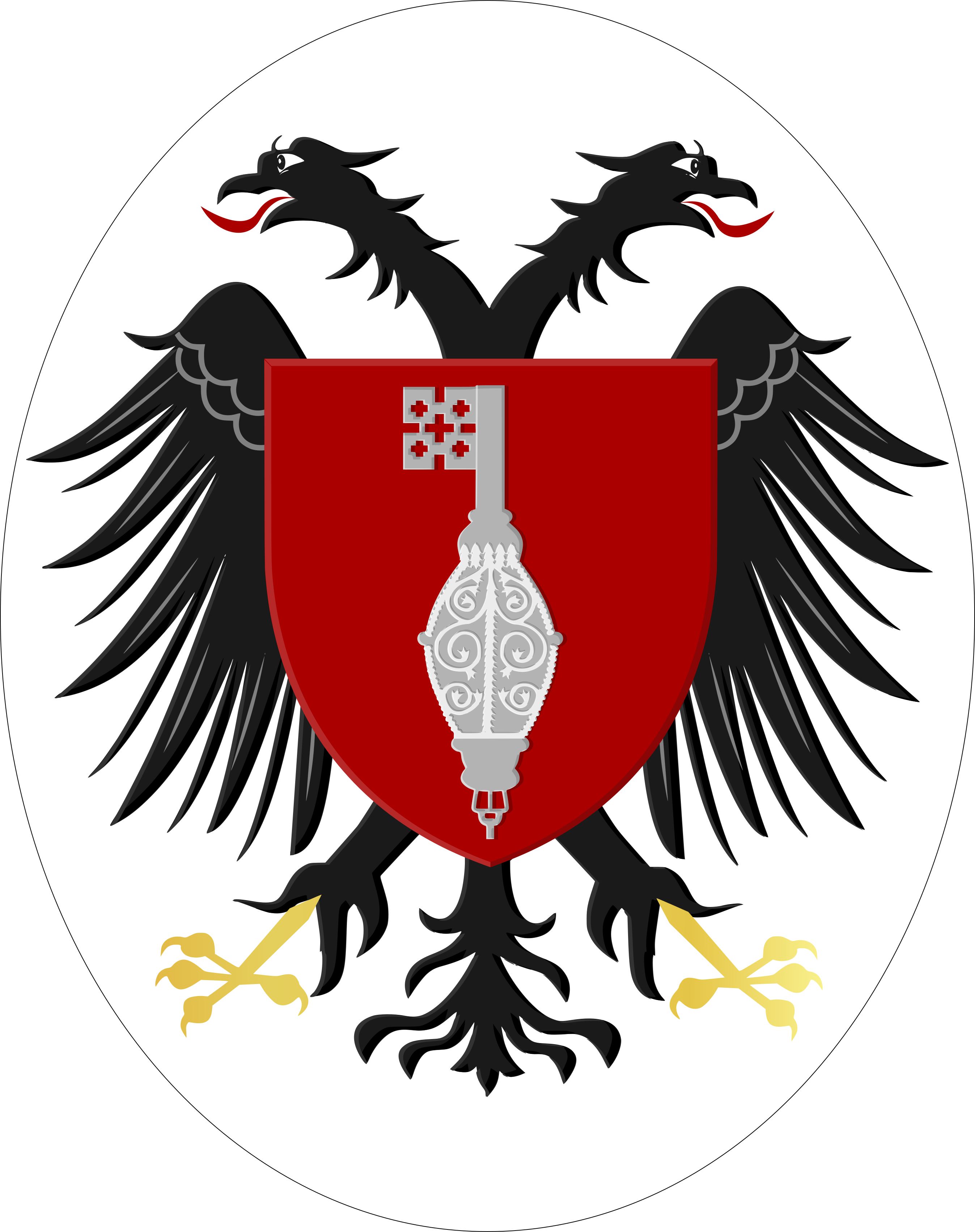
St. Gerlach as a Catholic enclave in the 17th and 18th centuries

In the 17th century the population and nobility of the three so-called Landen van Overmaze in the hilly landscape of Valkenburg, Dalhem and 's-Hertogenrade wanted to remain Catholic under Spanish rule. Attempts by the Dutch administration during the occupation of the area after 1632 to change this, for example by taking over churches and prohibiting processions and pilgrimages, were unsuccessful. Spain and the Republic of the United Netherlands did not succeed in reaching an agreement on the hilly landsacpe at the Peace of Munster in 1648. Therefore, the Eighty Years' War continued for the hilly landscape for another 13 years until 1661, when a partition of the lands of Overmaze was agreed upon in the Treaty of Partisi.

Partition treaty
Adriaen de Groot III, lord of Strucht, represented the Land of Valkenburg in the negotiations. Together with abbot Lamberti of Rolduc, who represented the Land of Hertogenrade, and abbot Ranst of Valdieu, who represented the Land of Dalhem, they travelled to The Hague, where they formed the Spanish delegation with the Spanish ambassador Gamarra. They wanted to keep the monasteries and castles of the nobility under the king of Spain and freedom of religion in the area that would fall to Holland. For this they were willing to relinquish the area around Maastricht and the castles occupied by Dutch troops in Valkenburg, Dalhem and 's-Hertogenrade.
It was not until December 1661 that a partition was agreed upon in the Partage Treaty. The Lands of 's-Hertogenrade, Dalhem and Valkenburg were split into a Dutch part and a Spanish part, which led to a duplication of administration. The towns of Valkenburg, Heerlen and Dalhem remained in State hands. The Catholic churches in Valkenburg and Houthem had to be opened to Protestants, despite the fact that there were hardly any Protestants in the area. Later in the 17th century there was a joint use of the churches ("simultaneum") in the Dutch area that continued into the 19th century.
In the 17th and 18th centuries the predominantly Catholic population in the State territories had to move to Spanish territories and so-called free seigneuries for Catholic worship. Although the town of Valkenburg and its surroundings became Dutch, the monastery of St. Gerlach remained Catholic through the efforts of the prioress Hoen van Cartils. Her birthplace, Schaloen Castle, and its surroundings also remained Catholic. That environment also included the area of Adriaen de Groot III around Strucht.
The Catholic enclave of St. Gerlach
Through the lobby of Adriaen de Groot and his neighbour at Schaloen Castle, the knight Hoen van Cartils, St. Gerlach could be preserved as a Catholic enclave of the Spanish Land of Valkenburg. The sister of Hoen of Cartiels, Agnes Hoen of Cartils, was the prioress of the Ladies' Abbey of St. Gerlach. The Hoen van Cartils family continued to devote itself to the Catholic cause thereafter. Thus, on her orders the Three Statues were placed at Schaloen in 1739, and the hunting lodge at Schaelsberg was converted into a hermitage as early as 1688. Across the meadows of the Geul there was a right of way between St. Gerlach and Schaloe, so that Agnes and Johan Reinier Hoen van Cartils and Adriaen de Groot could travel without hindrance between St. Gerlach, Schaloen Castle (where the Hoen van Cartils family lived) and Oud-Valkenburg.
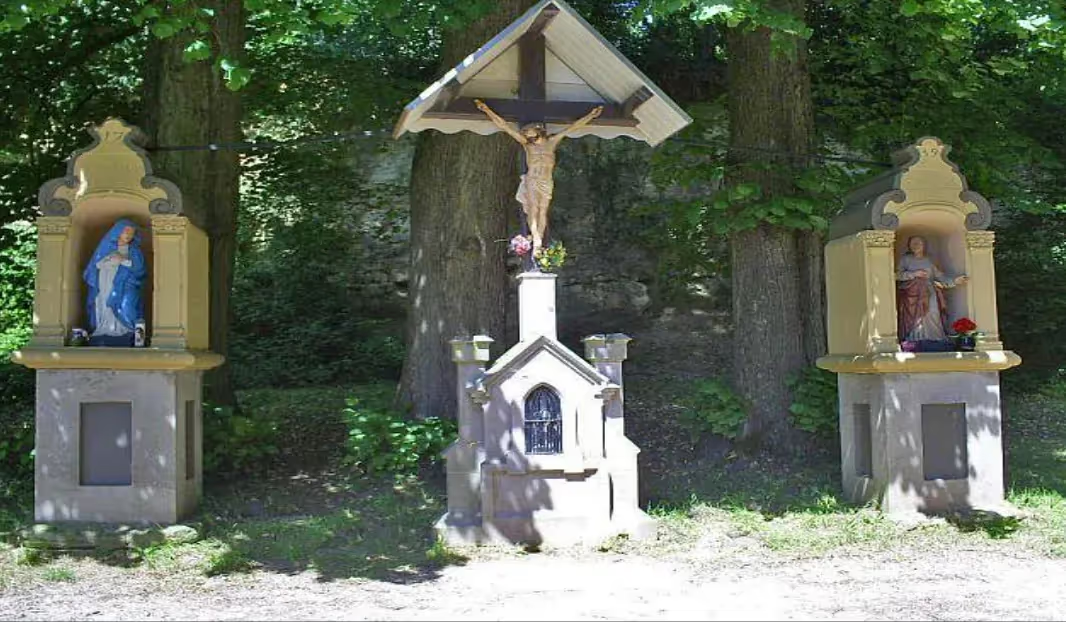
The three figurines at Schaloen castle

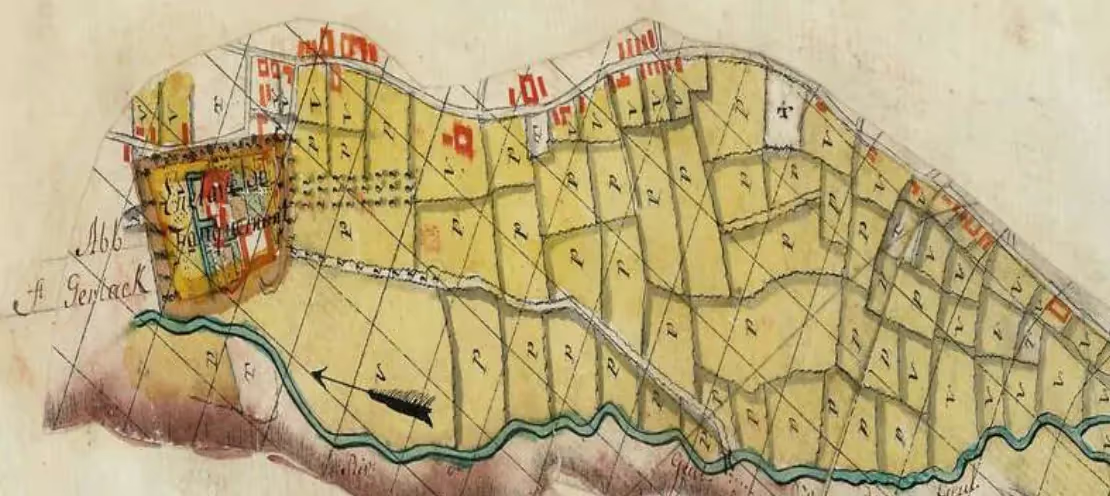
Above: the Spanish area of St. Gerlach (square top left) and the Spanish area of Oud-Valkenburg (Vieux Fauquemont) are outlined. The town of Valkenburg assigned to the Staatse Nederlanden lies between the two areas.
St. Gerlach thus became one of the Spanish "buitenlenen" (=Catholic enclaves) in the Land of Valkenburg. Despite its plight as an enclave, Prioress Agnes Hoen of Cartils managed to maintain the interest of noble ladies from the area in monastic life. The small Spanish enclave of St. Gerlach was surrounded by a wall, parts of which have been preserved on Onderstestraat. Through gates in the wall and in the monastery church, pilgrims could continue to visit St. Gerlach. However, the tenant farms of St. Gerlach were located in the Dutch State part of the Land of Valkenburg and came under Dutch State authority.
partners



donors