Kontext der klösterlichen Stiftungen im Deutschen Reich
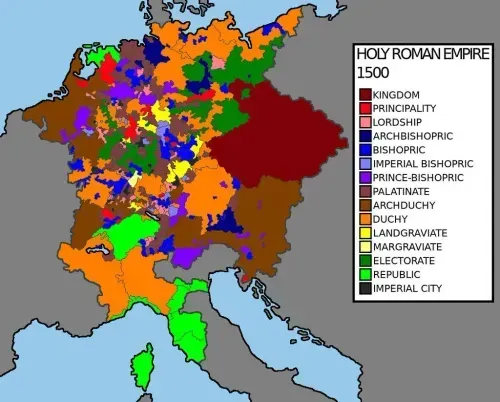
Karl der Große und seine Nachfolger regierten ihr Reich mit Hilfe von Lehnsleuten. Im 11. Jahrhundert erkannten sie, dass die weitgehende Belehnung der Staatsgewalt (Feudalisierung) zu einer Aushöhlung ihrer Macht führte. Infolgedessen verloren sie die direkte Kontrolle über ihre Territorien zugunsten von Feudalherren.
"Dieses Streben führte unter anderem zur Gründung von Landgütern".
Während die Lehnsgüter nach dem Tod des Lehnsmannes zunächst an den Kaiser als Lehnherrn zurückfielen, untergruben die Bestrebungen der Lehnsleute, die Lehnsgüter innerhalb ihrer Familien zu vererben, die kaiserliche Macht. Dies führte unter anderem zur Enstehung von Territorien, die vom Landesherrn regiert wurden, wie z. B. Valkenburg, in denen der Kaiser immer weniger Einfluss hatte. Hier entstanden die Herrschaftsgebiete des späteren Mittelalters, wie die Herzogtümer Brabant, Gelre, Gulik und Limburg.
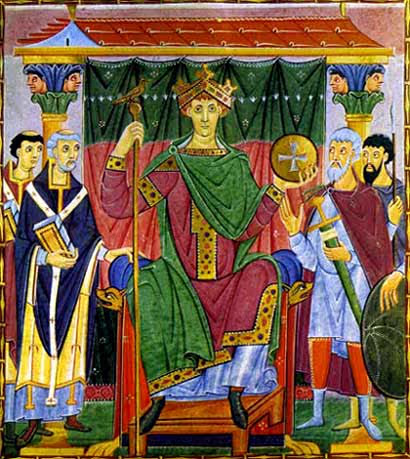
Der deutsche Kaiser Otto III. (983-1002) glaubte, eine Lösung für dieses Problem gefunden zu haben, indem er Bischöfe und Äbte mit weltlichen Befugnissen ausstattete, da das Zölibat aufgrund fehlender Nachkommenschaft die Gründung von Dynastien zu behindern schien.
Seitdem zeigten er und seine Nachfolger jedoch mehr Interesse für die administrativen Fähigkeiten als auf die geistliche Führung der Bischöfe und Äbte. Diese kaiserliche Ernennungspolitik führte zum so genannten Investiturstreit, einem Konflikt mit Papst Gregor VII. (1073-1085) über die Ernennungsrechte hoher Geistlicher, die neben der kirchlichen auch weltliche Macht ausübten. Dieser Konflikt dauerte bis zum Traktat von Worms (1122) an.
Im Jahr 985 ernannte Kaiser Otto III. als erster den Lütticher Bischof Notgerus (972-1008) zum Reichslehnsherr. Damit legte er den Grundstein für das Fürstentum Lüttich. Für die Geistlichen im Gebiet zwischen Maas und Rhein führte die kaiserliche Günstlingswirtschaft dazu, dass sie im Investiturstreit eher für den Kaiser als für den Papst Partei ergriffen.
Diese Konstruktion wurde später von Lehnsherren des Kaisers nachgeahmt, die ebenfalls Teile ihrer territorialen Macht durch die Verleihung von Lehnsrechten an Äbte und Klöster sichern wollten, wie z.B. die Herren von Heinsberg und Valkenburg, die daraufhin das Kloster Houthem-Sint-Gerlach gründeten (1201). Mit der Gründung solcher Klöster brachten die lokalen Adligen ihr Bewusstsein zum Ausdruck, dass sie in der Lage waren, ihre Macht autonom auszuüben; so trugen die von ihnen in den ersten Jahrzehnten des zwölften Jahrhunderts gegründeten Klöster und Kapitel zur Abgrenzung und Aufrechterhaltung ihrer territorialen Macht bei.
Mit der Gründung solcher Klöster versuchten die regionalen Machthaber, einen doppelten Zweck zu erfüllen. Einerseits wollten sie sich einen Teil ihrer weltlichen Macht sichern, andererseits versuchten sie, sich ihren Platz im Jenseits zu sichern, indem sie das Lesen von Messen und dergleichen für ihr Seelenheil zur Bedingung für ihre Spende machten. Üblicherweise waren sie auch advocatus (Schirmherr) des Klosters; auch beaufsichtigten sie den täglichen Betrieb des Klosters, indem sie einen Probst ernannten, der dafür sorgte, dass die weltlichen Rechte, mit denen die Stifter das Kloster ausgestattet hatten, respektiert wurden; die geistliche Leitung überließen sie dem Prior oder Abt.
Im Laufe der Zeit erwarben Klöster, wie das Norbertinerinnenstift van Houthem-Sint-Gerlach, allerhand zusätzliche Rechte, oft bestehend aus Schenkungen von Geld oder Gütern , mit denen sich die Stifter ihr Seelenheil zu sichern suchten; diese wurden in Urkunden festgehalten, in denen die Bedingungen der Schenkung beschrieben wurden.
"Im Laufe der Zeit erwarben Klöster, wie das Norbertinerinnenstift von Houthem-Sint-Gerlach, allerhand zusätzliche Rechte".
Partner



Spender