Rechtsstreit zwischen dem Sint-Servaaskapitel und Willem II. van Horn
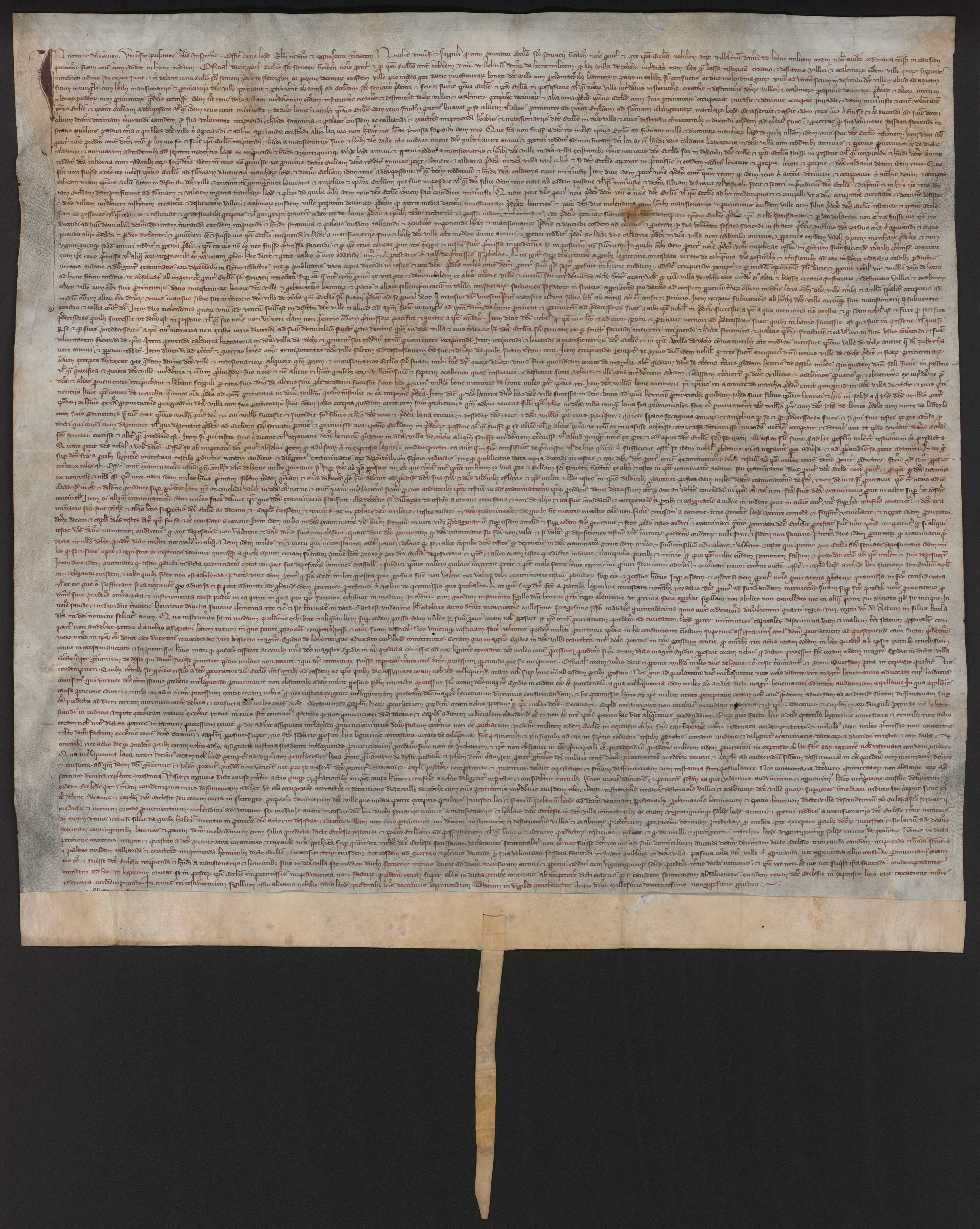
Ein Rechtsstreit zwischen dem Sint-Servaaskapitel und Willem II. van Horn über Rechte und Landbesitz in Weert im Jahr 1295.
Am 21. September 1062 bestätigte der römische König Heinrich IV. in Anwesenheit mehrerer Reichsgrößen eine Schenkung von Otto, Graf von Thüringen, und seiner Frau Adela an das Sint-Servaaskapitel in Maastricht, die Grundbesitz, Besitzungen und Rechte in Dilsen und Weert umfasste (Urkunde Nr. 1).
Diese Verleihung wurde später von Wilhelm II. van Horne (1245-1300) in Frage gestellt, der versuchte, seine weltliche Macht in Weert und Umgebung zu vergrößern. Seine Verstöße gegen die Rechte des Kapitels zwangen das Kapitel, Wilhelm II. vor dem Kirchengericht in Lüttich zu verklagen, das am 21. Mai 1295 ein Urteil fällte (Urkunde Nr. 75).
Dieses Urteil ist dadurch bemerkenswert, dass es ein vollständiges Bild des romanokanonischen Verfahrens gibt, wie es Ende des 13. Jahrhunderts vor dem kirchlichen Gericht in Lüttich üblich war, und der juristischen Spitzfindigkeiten, die dabei zur Sprache gebracht wurden.
Warum wurde die Klage des Kapitels vor ein kirchliches und nicht vor ein weltliches Gericht gebracht? Die Antwort liegt in der universellen Zuständigkeit der Kirche für alle Angelegenheiten, bei denen die Interessen der Kirche betroffen sind: die so genannten causae spirituales und causae spirituales annexae, geistliche Angelegenheiten (Seelsorge) und damit zusammenhängende Angelegenheiten (einschließlich der materiellen Rechte der Kirche).
Warum wurde das romanokanonische Verfahren angewandt? Die Kirche lebte nach römischem Recht und folgte im Wesentlichen dem Prozessrecht der späteren römischen Kaiserzeit, dem inquisitorischen Verfahren, einer rationalen Prozessform, bei der die Ermittlung der materiellen Wahrheit im Mittelpunkt stand und der Richter eine aktive Rolle spielte. Darin unterschied sich die kirchliche Rechtsprechung von der weltlichen, die noch lange Zeit die anklagende Verfahrensform verwendete, bei der der Richter passiv war und die Parteien ihren Streit durch Eide und Anrufung göttlicher Urteile schlichteten.
In der Urkunde vom 21. Mai 1295 schildert der Bischof - der kirchliche Richter - der Diözese Lüttich Schritt für Schritt den Verlauf des Verfahrens zwischen dem Kapitel und Willem van Horn, bevor er sein Urteil spricht. Im Wesentlichen läuft der Streit auf Folgendes hinaus: Das Kapitel wirft Willem van Horn vor, die Rechte des Kapitels in Weert zu verletzen. Das Kapitel verlangt von ihm, dass er dies in Zukunft unterlässt und das Kapitel für den Verdienstausfall entschädigt. Der Beklagte, Willem van Horn, bestreitet natürlich die Beschwerde des Kapitels und argumentiert im Gegenteil, dass er von alters her dazu berechtigt gewesen sei.
Das Kapitel forderte daher den Offizial auf, Gerechtigkeit walten zu lassen, zumal Willem van Horn sein Unrecht bereits vor rechtschaffenen Menschen zugegeben hätte.
Willem van Horn erwidert vor Gericht, dass die Beschwerde des Kapitels unbegründet sei und dass er die volle Gerichtsbarkeit in Weert besitze. Er beruft sich auf den offenen und friedlichen Besitz, den er und seine Vorgänger, die Grafen van Horn und Altena, seit mehr als sechzig Jahren haben. Wenn das Kapitel und seine Zeugen es wagen, etwas anderes zu behaupten, begehen sie Meineid und machen falsche Zeugenaussagen. Er fordert daher, dass der Offizial die Klage für unbegründet erklärt und dem Kapitel die Kosten auferlegt.
Nachdem also die Gerichtsgrundlage (litiscontestatio) feststand, wurden auf beiden Seiten Zeugen gehört und angefochten. So argumentierte der Prokurator des Kapitels, dass Willem van Horn - entgegen den Regeln des kanonischen Rechts - Zeugen in Weert und an anderen von der Kirche, dem Dekan und dem Kapitel verdächtigten Orten hatte vernehmen lassen, während diese Zeugen problemlos nach Lüttich hätten kommen können, um ihre Aussagen vor dem kirchlichen Richter zu machen. Das Kapitel argumentierte daher, dass die Zeugenaussagen zugunsten von Willem van Horn null und nichtig seien. Außerdem hätte es sich um Nötigung und Bestechung gehandelt. Außerdem hätte Willem van Horn Zeugen bedroht, die zu Gunsten des Kapitels aussagen wollten. Da es sich bei Willems Zeugen um Personen mit schlechtem Leumund, leichtfertig und meineidig, handelte, unter denen Huren, Ehebrecher und kirchlich exkommunizierte Personen, beantragte das Kapitel, ihre Aussagen für ungültig zu erklären.
Als Beweis für ihr Recht legte das Kapitel die ursprüngliche Verleihungsurkunde vom 21. September 1062 vor.
Der Prokurator von Willem van Horn erklärte daraufhin, dass sein Mandant es wegen der Lebensgefahr, der unsicheren Straßen und der politischen Unruhen nicht wage, persönlich nach Lüttich zu kommen, und bat den Offizial, ihm einen sicheren Ort anzubieten, an dem er persönlich erscheinen könne, um seinen Fall vorzutragen. Der Offizial kam dieser Bitte nach und bestimmte Maastricht als Ort für die Fortsetzung des Prozesses, wobei er Meister Gilles von Liebertenges anwies, ihn vorübergehend als Richter zu vertreten.
Später, als der Offizial erneut den Vorsitz führte, erklärte Willem van Horn, dass das Verfahren in Maastricht keinen Bestand habe, woraufhin er verlangte, dass die Klage des Kapitels abgewiesen würde und dem Kapitel die Kosten des Verfahrens auferlegt würden.
Der Offizial übertrug daraufhin sein Amt erneut einem Stellvertreter, Meister Henneman, dem Anwalt von Lüttich in Maastricht, der in einem Zwischenurteil gegen Willem van Horn entschied, woraufhin dessen Anwalt Berufung bei dem Offizial von Lüttich einlegte, der das Urteil von Meister Henneman bestätigte.
Willem van Horn zog es daraufhin vor, sich für die Flucht nach vorn zu entscheiden, und behauptete, das Kapitel sei nicht befugt, gegen ihn vorzugehen, da der Dekan und das Kapitel angeblich im höchsten Grad exkommuniziert seien. Per einstweiliger Verfügung bestimmte der Offizial dann, dass Willem van Horn die angebliche Exkommunikation nicht bewiesen habe, und verurteilte ihn zur Zahlung der Kosten.
Dies geschah wiederum gegen den Willen von Wilhelm van Horn, der daraufhin ein neues Verfahren gegen das Kapitel einleitete, bis das amtierende Gericht auch in diesem Fall entschied und festlegte, dass das Verfahren über die ursprüngliche Forderung des Kapitels fortgesetzt werden sollte.
Am Tag des endgültigen Urteils war Willem van Horn nicht anwesend. Mit der Begründung, dass die göttliche Anwesenheit die Abwesenheit Willem van Horns kompensiere, entschied der Offizial dennoch zugunsten des Kapitels. Er verbot Willem van Horn, die Rechte des Kapitels in Weert weiter zu verletzen, und verpflichtete ihn zur Zahlung von Schadenersatz und Prozesskosten.
Willem van Horn war mit diesem Urteil offensichtlich nicht zufrieden, und sein Nachfolger Gerard van Horn (1300-1331) brachte den Fall erneut vor ein kirchliches Schiedsgericht in Utrecht, das seine Entscheidung am 19. Dezember 1306 in einer neuen Urkunde festhielt.
Partner



Spender