Außergerichtliche Streitbeilegung avant la lettre
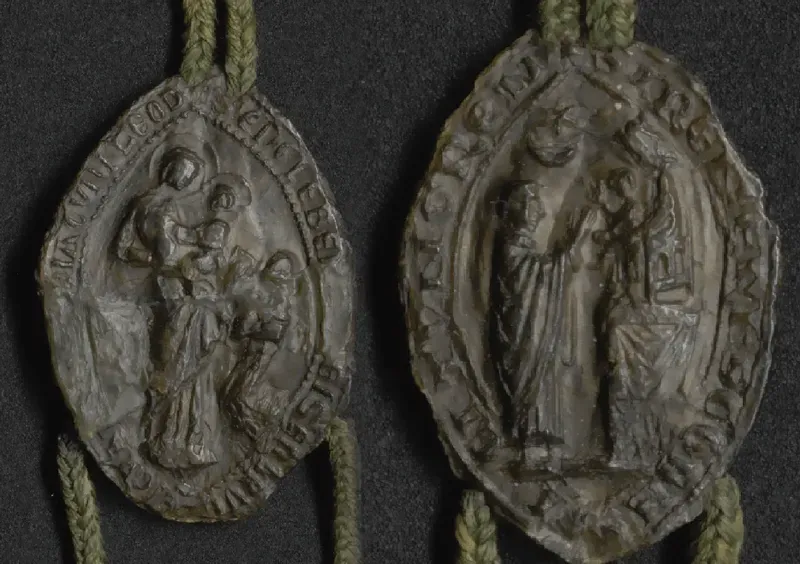
STREITIGKEITEN UM ABGABEN (ZEHNTEN UND "CIJNZEN") ZWISCHEN DER ABTEI THORN UND ANDEREN, 1265-1300
Einführung
Bei den Konflikten im13. Jahrhundert ging es häufig um Land(besitz). Die Besitztümer der Abtei Thorn wurden auf verschiedene Weise zur Nutzung überlassen. Darüber hinaus wurde eine Abgabe, eine Art Steuer erhoben, die im Prinzip ein Zehntel des (Getreide-)Ertrags des betreffenden Grundstücks ausmachte. Außerdem gab es Abgaben (Zehnten) von Lämmern, Fohlen und Ferkeln. Auf diese Weise sicherte sich die Abtei ein beträchtliches Einkommen.
Das Verhältnis zwischen dem Grundherrn - in diesem Fall der Abtei - und dem Landnutzer wurde durch einen Vertrag geregelt, der den Nutzer zur Zahlung von Pacht, "cijns" (jährliche Zinsen in Form von Geld oder Geflügel) und "keurmede" (Erbschaftssteuer in Form einer Kuh oder eines Pferdes) verpflichtete. Die "cijns" bezogen sich in der Regel auf Grund und Boden, konnten sich aber auch auf einen anderen Besitz beziehen, wie z. B. eine Mühle. Während die unterschiedlichen Steuern zunächst in Form von Naturalien beglichen wurden, wurden sie später - vor allem ab dem 16. Jahrhundert - mit Geld bezahlt.
Streitigkeiten über Abgaben (Zehnten, Zinsen und Steuern) waren an der Tagesordnung. Die Urkunden geben davon Zeugnis. Auffällig ist, dass diese Streitigkeiten regelmäßig "gütigen Schiedsrichtern" und "weisen und urteilsfähigen" Männern vorgelegt wurden (Urkunden Nr. 38 und 39). Eine außergerichtliche Streitbeilegung avant la lettre! Die Parteien versprachen dann, "die Entscheidung dieser Schiedsrichter ohne Verstöße zu akzeptieren, zu billigen und zu befolgen", unter Androhung einer Geldstrafe, die von der ablehnenden Partei zugunsten der Partei, die die Entscheidung befolgt, zu zahlen ist.
Wer waren diese "ehrenwerten Männer", die als Schiedsrichter herangezogen wurden, und warum wurden sie herangezogen? Wo traten die Streitigkeiten auf, welcher Art waren sie und wie wurden sie beigelegt?
Ein Erzdiakon und bibliophiler Gelehrter als Schiedsrichter
Die ersten schiedsrichterlichen Entscheidungen finden sich - zumindest in den Urkunden der Abtei Thorn - bereits im Jahr 1265 (Urkunde Nr. 21). In einem Streit zwischen der Abtei und dem Erzdiakon (Vorsteher eines Diakonats) des Bischofs von Lüttich, Engelbert van Isenburg, über die Zehnten von Mertersem (Princenhage bei Breda), Burgst (nördlich von Breda) und Overveld (bei Etten) treten der erwähnte Engelbert und ein gewisser Reinier als Schiedsrichter auf. Ersterer steht als Stellvertreter des Bischofs an der Spitze des Erzbistums Kempenland (zu dem das gesamte Gebiet um Breda gehörte) und war selbst in den Konflikt verwickelt; letzterer ist als Provisor (Rechtsberater) des Bischofs von Lüttich und Scholaster (Leiter und Lehrer an der Domschule des Domkapitels Unserer Lieben Frau in Tongeren) bekannt. Während über Engelbert van Isenburg nichts bekannt ist, wissen wir ein wenig mehr über den zweiten. Er besuchte die Abtei Thorn im Jahr 1262 (Urkunde Nr. 17) und stellte fest, daß die Einkünfte der Kanonikerinnen und Kanoniker (Priester) zu gering waren, um sich selbst zu versorgen. Er ordnete daher an, daß sie, solange das Pfarrhaus von Baarle unbesetzt war, in den Besitz der Zehnten dieser Pfarrei kommen sollten. Von Reinier wissen wir auch, daß er bibliophil war und eine umfangreiche und sehr wertvolle Büchersammlung besaß, wie aus einem Testament vom Juli 1267 hervorgeht.
Engelberts Beteiligung stand einer wohlüberlegten Entscheidung der Schiedsrichter offenbar nicht im Wege. In der Frage der Zehnten von Mertersem kamen die Schiedsrichter zu einem Kompromiss. Sie entschieden, daß der Pfarrer von Gilze wie üblich die Zehnten der Ländereien in dieser Pfarrei erhalten würde. Darüber hinaus erhielt er auch das Recht auf die Zehnten in Burgst und Overveld, soweit diese in der Gemeinde Mertersem lagen. Für die Zukunft brauchte sich der Pfarrer von Gilze keine Sorgen zu machen, denn ihm wurde zugesichert, daß die ihm zugewiesenen Einkünfte "auf ewig in die Zehnten der Pfarrei Gilze inkorporiert werden". Die restlichen Zehnten von Mertersem, so der Schiedsspruch, "werden ohne Widerspruch zur Erhöhung der Präbenden (Einkünfte) der Kanoniker und Kanonissinnen von Thorn abgetreten".
Diese wurden durch das Urteil benachteiligt, weil sie einen Teil der Abgaben (Zehnten) in Mertersem verloren. Mit dem Rat von "guten Männern" unterwarfen sie sich jedoch schließlich vollständig.
Eine bunte Schar...
Zwischen 1265 und 1300 tritt eine bunte Schar von Schiedsrichtern auf, wobei die Äbtissin und der Konvent stets als Parteien auftreten. Die anderen Parteien waren meist Landnutzer oder Pächter, aber auch Klöster, Pfarreien, Ritter und einmal sogar der Herzog van Brabant. Während im Falle der Mertersemer Zehnten die Hilfe hoher kirchlicher Verwalter in Anspruch genommen wurde, traten in späteren Fällen vor allem Ritter und Ministeriale als Vermittler auf. Auch Kanoniker (u. a. vom Sint-Lambertuskapitel in Lüttich und vom Kapitel Unserer Lieben Frau in Maastricht), Adelige und Schöffen traten regelmäßig auf. In einem Fall wurde sogar der Rat des Kellermeisters des Klosters Val-Dieu eingeholt (Urkunde Nr. 44). Die Hilfe von Schiedsrichtern wurde auf Ersuchen beider Konfliktparteien in Anspruch genommen, war aber offenbar nicht immer eine spontane Aktion, sondern geschah häufiger "auf Betreiben ehrenwerter Leute" (Urkunden Nr. 37 und 38).
Es zeigt sich, dass nicht nur die Art eines Kasus die Wahl beeinflusste (man bevorzugte Personen mit Wissen und Erfahrung), sondern dass die Parteien auch aus einer bestimmten persönlichen Perspektive nach geeigneten Personen suchten. Es wurde im Freundes- und Bekanntenkreis gesucht. Ein Streit im Jahr 1273 zwischen der Äbtissin und der Abtei einerseits und dem Fürsten Wilhelm von Horn andererseits bestätigt diese These (Urkunde Nr. 39). Ausdrücklich wird berichtet, dass sich Herr Willem auf seine Bitte hin von den Rittern Hendrik van Baexem und Marsilius van Berg vertreten ließ. Es ist anzunehmen, dass sie zu seinem Bekanntenkreis gehörten. Auch die Äbtissin und der Konvent entschieden sich wahrscheinlich für ihnen bekannte Personen. Sie wählten Geistliche, nämlich die Lütticher Kanoniker Jan van Rennenberg und Gijsbert van Bruchausen.
Die vorgetragenen Angelegenheiten - soweit sie in den Urkunden beschrieben sind - betrafen ausnahmslos die Eigentumsverhältnisse und die damit verbundenen Einnahmen. Manchmal genügt es zu sagen, dass sie "unterschiedliche Angelegenheiten und Streitpunkte" betrafen. Die Fälle zeichnen ein gutes geografisches Bild davon, wo die Abtei Besitztümer und damit Interessen hatte: Princenhage (oder Mertersem), Etten, Gilze, Baarle (alle in der Nähe von Breda), Ubach, Bergeijk und Neeroeteren. Es gibt eine Ausnahme von der Regel, dass die Streitigkeiten hauptsächlich "in der Fremde" ausgetragen wurden: der Fall des Pfarrers von Thorn, Jan van Baexem, gegen die Äbtissin und das Kloster von Thorn.
Pfarrer Johannes von Baexem gegen die Abtei
In den 1280er Jahren kam es zu einer Kontroverse zwischen der Äbtissin Guda van Rennenberg und der Abtei und dem Pfarrer von Thorn, Jan von Baexem, der auch "ewiger Vikar" (fest ernannter Pfarrer) von Oirschot war (Urkunden Nr. 54 und 55). Es handelte sich um einen Konflikt, der über die Landfrage hinausging. Eine Meinungsverschiedenheit betraf die Rechte an den Novalzehenten (Abgaben auf neue Ernten oder auf neu gewonnenes Land) in Thorn, während andere Probleme die Frage betrafen, ob der Vikar automatisch ein Recht auf das Kanonikat der Abtei und auf die dafür geltenden Pfründe (Einkünfte) geltend machen konnte. Außerdem gab es Meinungsverschiedenheiten über die Rechte und Pflichten der Pfarrei, die das Verhältnis zur Äbtissin und zum Konvent lange Zeit belastet hatten. Als Kompromiß gelang es der Äbtissin und der Abtei, den Pfarrer dazu zu bringen, im Voraus einem Vergleich zuzustimmen. Dieser sah vor, daß zwei Drittel der neuen Zehnten an die Äbtissin und die Abtei und ein Drittel an die Pfarrei fielen, im Tausch gegen den jährlichen Erhalt von zehn mud Roggen und der gleichen Menge Hafer. Dies war an die Bedingung einer päpstlichen oder anderen (höheren) Bestätigung geknüpft (Charta Nr. 54).
Der Dekan und der Kantor (Vorsänger) des Maastrichter Liebfrauenkapitels, Alexander bzw. Hendrik van Houthorne, wurden zu Schiedsrichtern ernannt. (Urkunden Nr. 53 und 55). Sie fällten ihr Urteil 1287, "nachdem sie sich eingehend beraten, den Kompromiss studiert, den Rat von Rechtsgelehrten eingeholt und (alles) richtig gemacht hatten". Pfarrer Jan gab das Kanonikat der Abtei auf, das nicht automatisch mit der Pfarrstelle verbunden war. Ansonsten erlaubte das Urteil beiden Parteien, sowohl die alten als auch die neuen Zehnten auf den Feldern zu erheben, auf denen sie dies bisher zu tun pflegten. Die künftig auf den neuen Feldern erhobenen Zehnten fielen jedoch zu zwei Dritteln an die Äbtissin und die Abtei und zu einem Drittel an die Pfarrei. Die Vermittler stützen sich bei dieser Regelung auf "den bisher von der Kathedrale von Lüttich befolgten Brauch", auf den sie von einigen Rechtsgelehrten hingewiesen worden waren. Mit der Kathedrale von Lüttich ist die Kathedrale Sint Lambertus gemeint.
Auch die Zuständigkeiten von Abtei und Pfarrei für die Feier von Totenmessen und die Aufnahme von Meßintentionen in die Eucharistiegebete wurden geklärt. Offenbar war es üblich geworden, daß die Gemeindemitglieder zu diesem Zweck den Pfarrer und die anderen Priester in der Pfarrrei umgingen und die Kapläne an den Altären der Abteikirche aufsuchten. Dadurch entgingen der Pfarrei erhebliche Einnahmen. Um der Pfarrei entgegenzukommen, legten die Schiedsrichter fest, "daß die Kapläne der Altäre (der Abteikirche) an den vier großen Festen, den Dreißig-Tage-Feiern und den Totenmessen sowie den besonderen Messen keine Spenden von Gemeindemitgliedern entgegennehmen dürfen, es sei denn, es wurde vorher festgestellt, daß der Pfarrer oder sein Stellvertreter aus diesen Spenden zufriedengestellt ist". Schließlich wurden Regeln für den Status des Personals der Äbtissin und des Klosters aufgestellt. Dieses gehörte nicht zur Pfarrei und war von den Verpflichtungen der Pfarrei befreit, wenn es innerhalb der Immunität (rechtliche Abgeschiedenheit) des Klosters untergebracht war.
Die Autorität der Schiedsrichter war erneut groß, denn sowohl die Äbtissin Guda van Rennenberg und der Konvent als auch Pfarrer Jan van Baexem baten den Bischof von Lüttich, Jan van Vlaanderen, am 1. Oktober 1287 um die Ratifizierung der Urteile (Urkunde Nr. 58). Äbtissin Guda van Rennenberg und Pfarrer Jan von Baexem waren offenbar nicht zufrieden mit der Festschreibung ihrer Vereinbarung über die Zehnten in Thorn und schlossen 1299 eine neue Vereinbarung. En passant wurden dann auch die Zehnten in Beersel, Baexem, Haler und Stramproy einbezogen, so daß auch diese eine feste formale Grundlage erhielten (Urkunde Nr. 70).
Zum Schluß
Es ist auffällig, wie häufig bei der Beilegung von Streitigkeiten die Methode der so genannten Mediation angewandt wurde. Lag der Grund dafür im Mangel an (juristischem und anderem) Wissen und Autorität seitens der regulären Justizbehörden? Wurde die Akzeptanz erhöht, wenn die Urteile von Kapitelherren aus Lüttich oder Maastricht oder von Rittern oder Ministerialen aus dem Ubacher Raum vorgeschlagen wurden? Darüber können wir nur Vermutungen anstellen. Tatsache ist, daß die Menschen im Mittelalter stets nach praktischen Lösungen suchten. Die Beilegung von Streitigkeiten bedeutete daher oft, einen Kompromiss zu finden, mit dem man weiter leben konnte. Die Menschen schienen großes Vertrauen zu Schiedsrichtern zu haben, an die sie selbst herantraten und die oft zu ihrem Bekanntenkreis gehörten. Im kirchlichen und weltlichen Prozessrecht gibt es zu diesem Zweck die Figur der amicabilis compositio, der gütlichen Einigung. Die Akzeptanz der gegnerischen Parteien für das Urteil dieser Schiedsrichter war hoch, schließlich hatten die Parteien sie selbst ernannt.
Partner



Spender